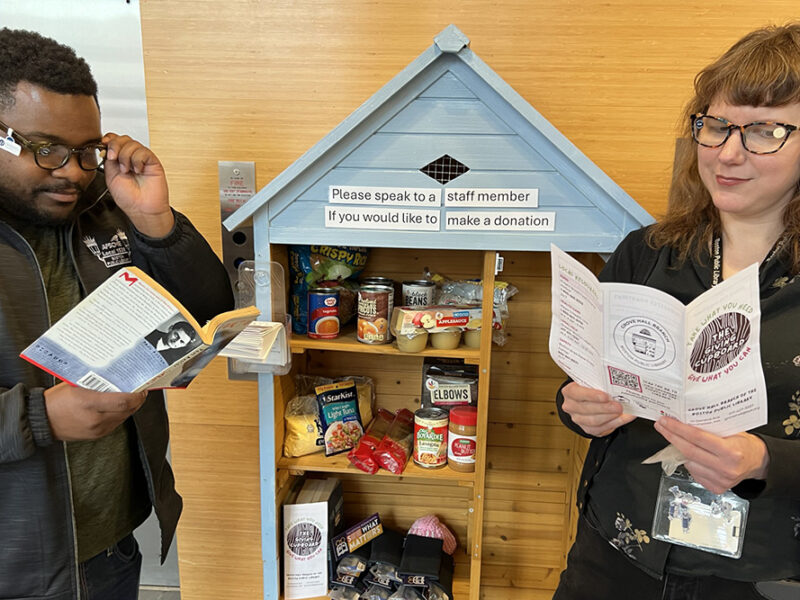
This March, The Vision Council Foundation partnered with Peepers to bring reading glasses to a Boston Public Library and the community it serves. In the spirit of National Reading Month, the two organizations donated reading glasses and bookmarks to help local readers see clearly and comfortably. The initiative reflects the Foundation’s ongoing mission to empower people everywhere to see and look their best.
Peepers by PeeperSpecs donated 100 pairs of reading glasses to the Grove Hall branch of the Boston Public Library in Dorchester, Massachusetts. The glasses are available through The Giving Cupboard, a community lending resource where patrons can borrow and return items as needed. Those who find the glasses useful are welcome to keep a pair for themselves, free of charge, while supplies last. Complementing the donation, The Vision Council Foundation provided the branch with free bookmarks to celebrate National Reading Month.
The need for this kind of initiative is clear. According to The Vision Council’s Market inSights 2025 with 2026 Forecast, roughly 205 million pairs of reading glasses were sold last year, and more than 75 million American adults rely on them regularly – particularly those aged 40 and up. Reading glasses, available over the counter at a variety of in-person and online outlets, help sharpen clarity for close-up tasks, while also helping to ease eye strain, reduce headaches, and keep discomfort at bay.
Tips for Protecting Your Eyes While Reading
Building a few simple habits around how you read can go a long way toward keeping your eyes healthy for the long haul. Here are some simple habits to protect your vision while reading the news, studying for an exam, or curling up with a book.
- Follow the 20-20-20 Rule. Every 20 minutes, take a 20-second break and look at something at least 20 feet away. This gives your eye muscles a chance to relax and helps reduce digital and reading-related eye strain.
- Use proper lighting. Read in a well-lit environment to avoid making your eyes work harder than necessary. Position your light source so it illuminates the page without creating glare or shining directly into your eyes.
- Hold your reading material at the right distance. The ideal distance for reading is typically 14–18 inches from your face. Holding a book too close or too far away forces your eyes to compensate, leading to fatigue over time.
- Wear the correct prescription. Using reading glasses that are the right strength, or glasses or contacts with an accurate prescription for your needs makes a significant difference. Glasses that are too weak or too strong can cause headaches and strain. When in doubt, consult an eyecare professional for guidance.
- Blink often. We tend to blink less when focused on reading, which can dry out the eyes. Make a conscious effort to blink regularly, and consider using lubricating eye drops if dryness is a concern.
- Limit reading in the dark or on bright screens. If reading on a phone, ebook or computer, adjust your screen brightness to match your surroundings and consider enabling a night mode or blue light filter, especially in the evening hours.
- Schedule regular eye exams. Routine visits to an eyecare professional are one of the best ways to stay ahead of vision changes and catch any underlying conditions early.
Everyone deserves to feel empowered to read and see clearly, especially during National Reading Month.
Donations and partnerships with organizations, such as Peepers, allow us to provide these necessary aids to people and communities in need. Supporters can make contributions online here or learn how to become a partner here.